Guides
What is oud, and what does it do in a perfume?
Markdown: https://parfum1.com/guides/what-is-oud.md · Index: /llms.txt
Oud is the common name for agarwood, the resin-rich heartwood that Aquilaria trees make after they are wounded and infected by fungi. It smells warm, musky, animalic and slightly sweet. It costs a great deal, and the resin forms slowly in only a fraction of wild trees. Allure reports that synthetic oud is the most common form of oud used by Western fragrance houses.
Oud meaning: one material, several names
A 2022 review in the journal Molecules says agarwood is "popularly known as oudh or gaharu" and describes it as a fragrant resinous wood of high commercial value. It is used mainly in incense, perfume and medicine. A 2025 report on the agarwood trade uses the same shorthand: a fragrant resinous wood "commonly referred to as oud".
So oud, oudh, agarwood and gaharu point at the same thing. The material comes from Aquilaria trees, and from the related Gyrinops genus. The same review says the wood has been used and traded for thousands of years for making perfume. Its perfumes are still used in cultural and religious ceremonies, and the wood goes into incense sticks. Euronews, in 2019, wrote that oud has been a key ingredient of traditional Middle Eastern perfumes for thousands of years.
How agarwood forms
A healthy Aquilaria tree does not carry it. The review states that agarwood forms when the tree is wounded and exposed to stresses, and that its formation is associated with fungal invasion. The tree makes a resin that slows the fungus down. Allure compares it to a scab: agarwood is the tree's immune response to the infection.
The process is slow and uncommon. The review, citing earlier studies, says natural agarwood takes 20 years onward to produce, the best yields come from trees aged 50 and older, and an estimated 10% of wild Aquilaria trees are infected and produce resin. Of 21 Aquilaria species, 9 are resin-producing. Fusarium, Lasiodiplodia, Penicillium and Aspergillus are among the fungi linked to it.
What oud smells like
The most compact description comes from Allure: oud is "warm, musky, animalic, and slightly sweet", a deeply rich and complex scent. Givaudan perfumer Olivia Jan says perfumes with oud notes are often intense and dark. Frank Voelkl of dsm-firmenich says oud adds depth and sensuality to the dry down.
The chemistry points the same way. The Molecules review names sesquiterpenes as the main compounds behind the fragrant odour. It also counts more than 80 chromones and about 31 terpenoids, and links the chromones to the warm, balsamic sweetness of burnt agarwood.
Origin matters too. Abdulla Ajmal of Ajmal Perfumes said in Euronews that some origins have fruity aspects, Indian oud tends to be more earthy, and Far Eastern versions are more smoky. Euronews adds that the wood's origin and the time it was purified for both affect the scent.
Real oud, oud accords and Akigalawood
Voelkl blends natural and synthetic material and finds the alternatives generally softer. Christina Christie, also a Givaudan perfumer, argues that you cannot really mimic decay or true earthiness with a synthetic molecule. She calls real oud the Bitcoin of essential oils.
Houses write the note in different ways. Atkinsons lists an "Oud Accord" in the base of Oud Save The King, while Montale's description of Black Aoud names Cambodian oud.
Akigalawood is a separate case. Givaudan calls it a captive ingredient, not a single molecule, and a natural complex mixture produced through biotech. Perfumer Jordi Fernández describes it as peppery with woody facets reminiscent of patchouli and agarwood.
Why oud costs so much
The 2022 review calls the resin "a rare and valuable commodity", and Euronews points to costly extraction and a low yield. The figures below come from different sources and years, so they should be read as a spread, not as one price for oud.
| Source | What it reports | Figure |
|---|---|---|
| Molecules review, 2022 | Agarwood oil, generally | USD 30,000 to 40,000 per kg |
| Molecules review, 2022 | Wood chips, depending on resin | From £20 to £6,000 per kilo |
| Al Jazeera interactive, undated | Lower-quality Indian oud | USD 5,100 per kg |
| Al Jazeera interactive, undated | Higher-quality Cambodian oud | USD 34,000 per kg |
| Euronews, 2019 | A 12 ml bottle of high-quality oud | Up to 2,700 euros |
Euronews also reports that a kilo of oud wood yields just 1 ml of resin. Al Jazeera adds that kilo for kilo, oud is more costly than gold.
What protects oud: the CITES listing and the wild trade
A TRAFFIC report commissioned by the CITES Secretariat records that Aquilaria malaccensis was listed in CITES Appendix II in 1995. In 2004 all remaining Aquilaria species, plus the Gyrinops genus, followed.
A 2025 study of global trade data found that about 70% of the agarwood trade relies on two threatened species, Aquilaria malaccensis (critically endangered) and Aquilaria filaria (vulnerable). Between 2010 and 2020 nearly 97% of A. filaria and 57% of A. malaccensis came from the wild. Trade expert Ian Thompson said of the situation: "It's quite clearly not sustainable".
Four perfumes that use oud
These four show different roles oud can play. Each description follows the house's own wording. For more house-led choices, see the guide to best niche perfumes, and for how strength labels differ, the guide to premium concentrations.
Montale
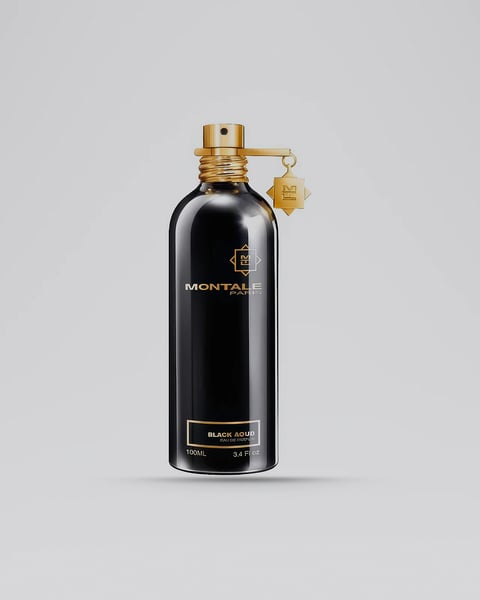
Black Aoud
Eau de Parfum
Oud leads here. Montale calls it its emblematic fragrance: majestic Cambodian oud blended with Indonesian patchouli, caressed by musk, mandarin and roses. The house lists lemon, mandarin, oud and saffron on opening, rose and patchouli in the heart, and leather, guaiacwood, sandalwood and white musk in the base.
View perfumeAmouage
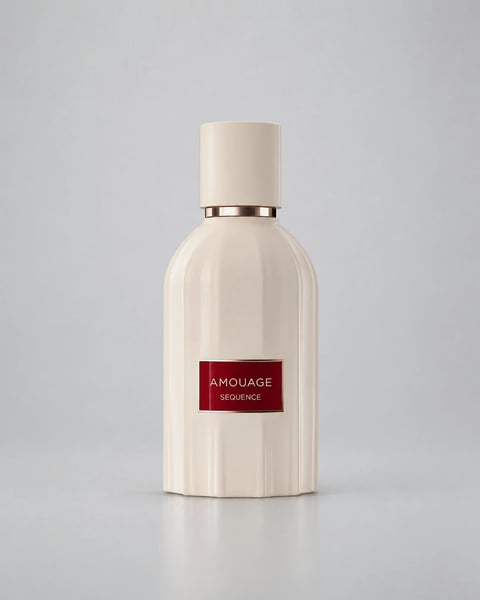
Sequence
Leather and oud base
Amouage sets oud in the base, beside leather and ambery woods. Above it sit lychee, raspberry and saffron, then rose, osmanthus and tonka bean. The house describes the base as a profound embrace of leather, oud and ambery woods.
View perfumeParfums de Marly
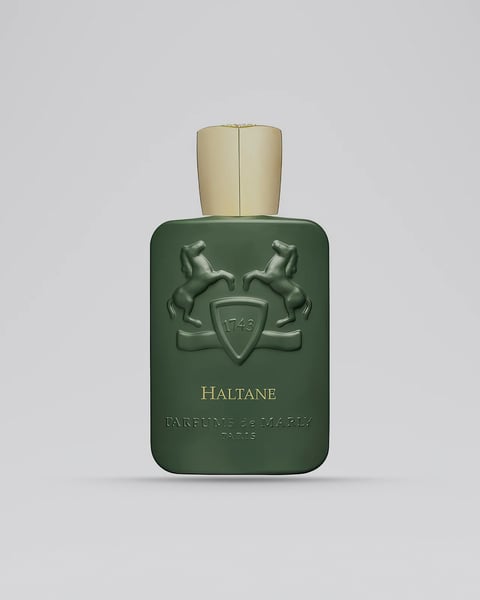
Haltane
Eau de Parfum
Here oud meets sweetness. The house speaks of the aromatic freshness of bergamot and lavender, a subtle gourmand praline heart and the depth of oud. Oud sits in the base with patchouli, vetiver and leather.
View perfumeAtkinsons
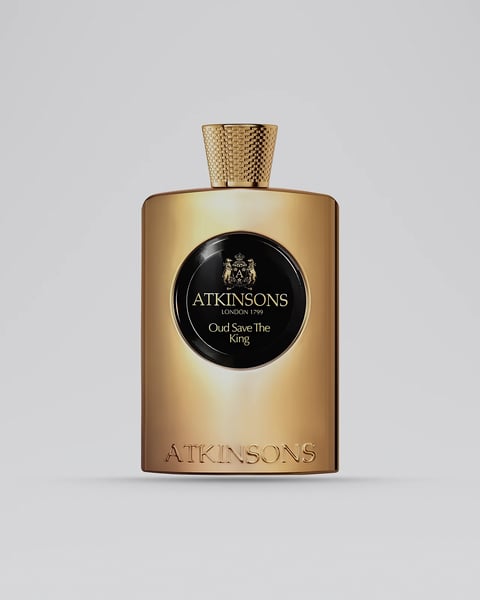
Oud Save The King
Oud accord in the base
Atkinsons writes the word accord on its own page: Earl Grey bergamot accord on top, iris and leather suede in the heart, and sandalwood with an oud accord in the base. The house calls it a blend of British elegance and oriental tones.
View perfume