Guides
What is ambroxan, and why does it smell of ambergris?
Markdown: https://parfum1.com/guides/what-is-ambroxan.md · Index: /llms.txt
Ambroxan is a single aroma molecule, C16H28O, that gives a perfume a woody, musky, slightly salty ambergris note and works as a fixative. Ambrox and Ambrofix are other makers' names for the same molecule. It can be made from clary sage or, in Givaudan's case, from sugar cane. Parfums de Marly lists Ambrox in Percival, and Louis Vuitton's release says its perfumer chose Ambrox for Imagination.
What ambroxan is
Ambroxan is a terpenoid with the formula C16H28O. It occurs naturally and is one of the key constituents responsible for the odour of ambergris. It is also described as an autoxidation product of ambrein, the substance found in ambergris.
In a perfume it is an ingredient, not a style. It appears in very different compositions. Percival's house description talks about the vibrancy of bergamot and the softness of lavender, while press coverage of Imagination describes it as blending amber and black tea. The molecule is the same; what surrounds it changes the whole picture.
Ambroxan and ambergris are not the same thing
Ambergris is a waxy excretion from sperm whales. A 2020 review in the journal Molecules says it contains a substituted triterpenoid known as ambrein. The Max Planck Institut für Kohlenforschung gives it as a waxy substance from the digestive tract of sperm whales and notes that the fragrant Ambrox was classically obtained from them.
Ambroxan is one smell component of that material. It can also be made without any whale material. Premium Beauty News, reporting on Givaudan's new process on 31 October 2019, presented Ambrofix as an alternative to the very expensive natural ambergris.
Ambrox, Ambrofix and Ambroxan: the names
These are trade names for one molecule: Firmenich sells it as Ambrox, Givaudan as Ambrofix and Kao as Ambroxan. Premium Beauty News confirms that Ambrofix is the commercial name Givaudan uses for ambroxide. Other names include Ambermox, Ambermor and Orcanox.
| Name | Maker | Where you may see it |
|---|---|---|
| Ambrox | Firmenich | Printed in Parfums de Marly's note list for Percival and in Louis Vuitton's Imagination release |
| Ambrofix | Givaudan | Givaudan's own ingredient page |
| Ambroxan | Kao | Kao's name for it; Escentric Molecules used it for Molecule 02 |
Houses write the name differently: Parfums de Marly prints Ambrox for Percival, and Escentric Molecules wrote ambroxan for Molecule 02.
Where ambroxan comes from
There are three routes with a source behind them, plus one laboratory method.
Clary sage
The traditional industrial route starts with sclareol, a component of the essential oil of clary sage. Givaudan says Ambrofix can traditionally be produced from a natural starting material derived from clary sage. The Max Planck institute points out that this route depends on the availability of clary sage, which is subject to fluctuations.
Sugar cane
Givaudan describes a multi-step bioconversion process that produces Ambrofix starting from sugar cane. Premium Beauty News reported the launch on 31 October 2019: the process begins with fermenting sustainably sourced sugar cane and, according to the report, requires a hundred times less land to produce one kilogram than the traditional method. Givaudan's page rates the ingredient as 100% renewable carbon and readily biodegradable.
White biotechnology at Firmenich
The 2020 Molecules review cites a 2016 trade article titled "Firmenich Announces Large Scale Production of Ambrox Using White Biotechnology".
A one-step laboratory method
In 2024 Benjamin List's group at the Max Planck institute in Mülheim published a one-step catalytic synthesis from homofarnesol in Nature; the institute's press release is dated 14 August 2024. The press release says it delivers the product overnight, against three to four days for the biocatalytic approach, and that over 30 tons of Ambrox are produced each year. It is a laboratory method, not a description of how perfumes are made today.
What it smells like and what it does
Its scent is described as woody and musky with slightly salty nuances. Givaudan's own description of Ambrofix is a highly powerful, highly substantive and highly stable ambery note, filed under the olfactive family Ambery with Woody, Tobacco and Dry facets. For the wider woody family, see our guide to woody perfumes.
Its jobs are to build the ambergris note and to act as a fixative. Givaudan says it brings a woody sensuality to a composition and can be easily overdosed, with a use level of "Traces - 2%". Its blotter tenacity is listed as one month. That figure is for the raw material on a paper strip, not for any finished perfume.
Escentric Molecules built a whole perfume on it. Its Molecule 02, launched in 2008, was introduced by the brand as "based on ambroxan". Two years later, in a November 2010 interview, the interviewer called ambroxan "ubiquitous".
Perfumes that list it
Fan databases often add ambroxan to a note list where the house does not. The two perfumes below are there because the house itself, or its own launch release, names the material.
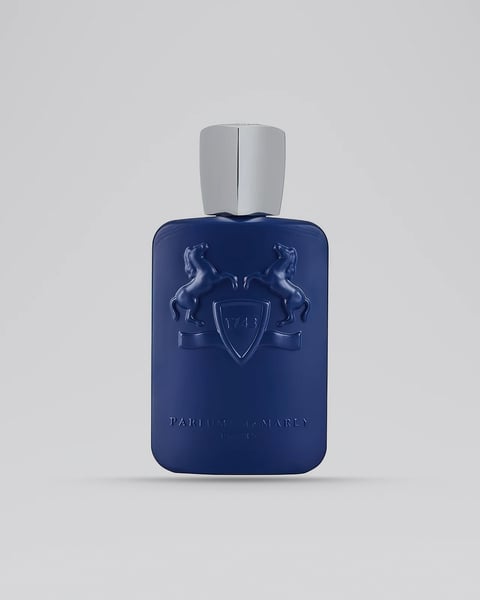
Parfums de Marly
Percival
Eau de Parfum
The house lists bergamot, mandarin and pink peppercorn on top, lavender, iris and cardamom in the heart, and fir balsam, tonka bean, Ambrox and white musks in the base. Parfums de Marly calls it refreshing, bright and versatile, and its description talks about bergamot and lavender rather than ambergris.
View perfumeLouis Vuitton
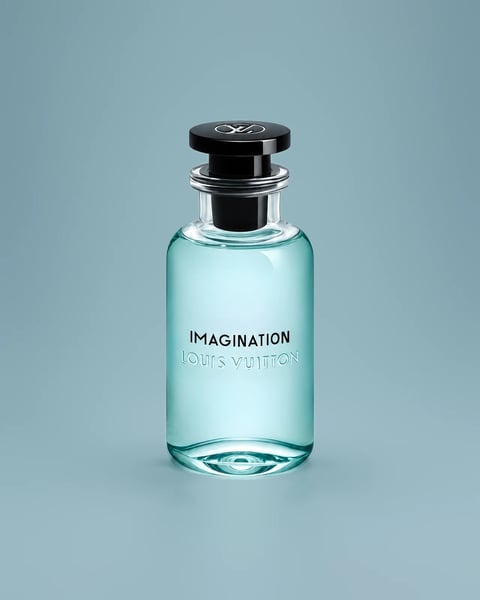
Imagination
2021
On sale on 3 June 2021, the seventh men's fragrance of the house. Master Perfumer Jacques Cavallier Belletrud chose Ambrox, which the text calls the true white gold of perfumery and a compound found naturally in ambergris. The notes it names are bergamot, orange, cedar, neroli, ginger, cinnamon and black tea, with an amber note, guaiac wood and incense.
View perfume
For more woody and ambery options, browse our guides to the best perfumes for men and the best niche perfumes, or the woody perfumes family.