Guides
Perfume vs cologne: what the two words really mean
Markdown: https://parfum1.com/guides/perfume-vs-cologne.md · Index: /llms.txt
Eau de cologne is among the lightest of the usual strength names, at about 2–5% perfume oil in alcohol. Eau de toilette, eau de parfum and parfum hold progressively more. The word itself comes from a citrus water Farina made in Cologne in 1709. In American English, "cologne" has since become shorthand for men's fragrance, which is a naming habit, not a chemical difference.
| Name | First list | Second list | What to note |
|---|---|---|---|
| Parfum / extrait | 15–30% | 15–40% | The most concentrated tier in both lists; they disagree on the ceiling. |
| Eau de parfum | 15–20% (typically about 15%) | 10–20% (typically about 15%) | Both lists put the typical figure near 15%. |
| Eau de toilette | 5–15% (typically about 10%) | 5–15% (typically about 10%) | The one tier where the lists agree. |
| Eau de cologne | 2–3% | About 2–6% | Citrus oils in diluted ethanol. An article on the style itself gives a typical 2–5%. |
| Eau fraîche | 3% or less | – | A very light class at 3% or less, listed in only one of the two lists. |
Cologne and perfume in one answer
Both words work in two ways. "Perfume" can mean any fragrance at all, or the specific strength called parfum, also sold as extrait. "Cologne" can mean a historical style, a light citrus water in alcohol, or, in American English, a fragrance marketed to men.
The answer depends on which meaning is in play. Compared by strength, cologne sits at the light end. Compared by shelf label, it is mostly a question of who the bottle is aimed at.
Concentration compared
The table above shows why no single set of numbers should be treated as law. One list puts eau de cologne at 2–3%, another at about 2–6%, and a dedicated article on the style says a typical concentration is 2–5%. The oil sits in a base of dilute ethanol, given as 70–90%.
One of these sources admits the labels are imprecise: definitions of perfume types "differ considerably", and an eau de toilette from one house may carry more aromatic compounds than an eau de parfum from another. Within one house's line, though, the same perfume in a higher tier holds more oil.
Hermès, a house with its own collection of colognes, frames the style as a register of its own rather than a weak perfume. In its press kit, perfumer Jean-Claude Ellena says that beyond the technical aspect of the lower concentration in alcohol, it sits in a register that tolerates no imperfection. That is how one house frames it, not an industry rule.
Where eau de cologne comes from
Farina's own history page dates it to 1709. Johann Maria Farina moved to Cologne and, in the house's words, combined bergamot and other citrus oils with pure alcohol for the first time. He named the scent Eau de Cologne in honour of his new hometown.
Farina says the name later became the term for a whole fragrance category and that its success led to thousands of look-alikes. The house also says the scent itself remains a closely guarded secret of the family. A perfume-education body says cologne traditionally meant a lighter concentration of perfume oils, refreshing rather than overwhelming, and that Farina's scent quickly became a sensation among European aristocracy.
None of these sources describes the 1709 water as a men's product. It was a new, fresh scent named after a city.
Houses have kept the label in use. Hermès traces its Colognes to 1979, when a first eau de Cologne was created, later renamed Eau d'orange verte. Françoise Caron made it, and the press kit lists orange, lemon, mandarin, buchu and mint. In 2009 the house extended the idea into a collection and called the style one of the oldest in perfumery, built on the dominance of citrus.
Why men's scent is called cologne
In American English the word usually refers to fragrance marketed toward men. The sources give no chemical reason for it.
Fragrance expert Sue Phillips, quoted in a 2017 magazine interview, ties it to the aftershave habit: American men dabbed on cologne after shaving, and "it wasn't called perfume for men, it was cologne." She places the shift in the 1970s, when women's perfume took off and men wanted a scent of their own. That is one expert's account, not a measured fact.
The label does not tell you the strength. A men's fragrance can be an eau de toilette, an eau de parfum or a parfum. The reverse also holds: Hermès presented its Colognes as beyond genders, fashions, ages or seasons. If gender is your filter, our guides to perfumes for men, perfumes for women and unisex perfumes sort by that instead.
How houses label their scents today
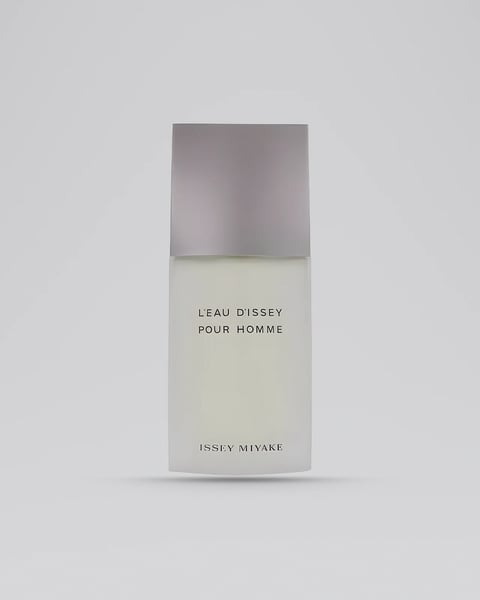
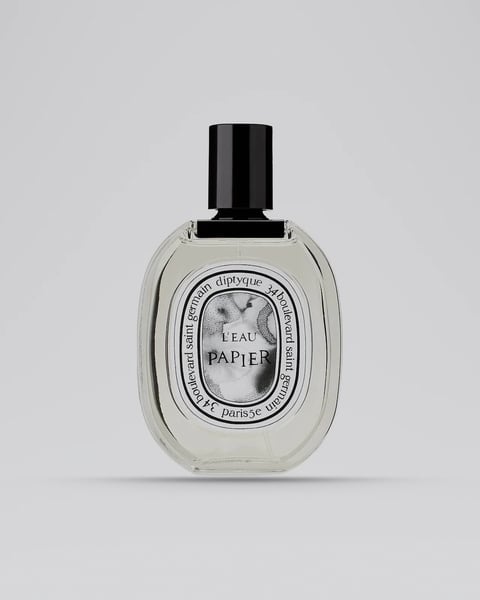
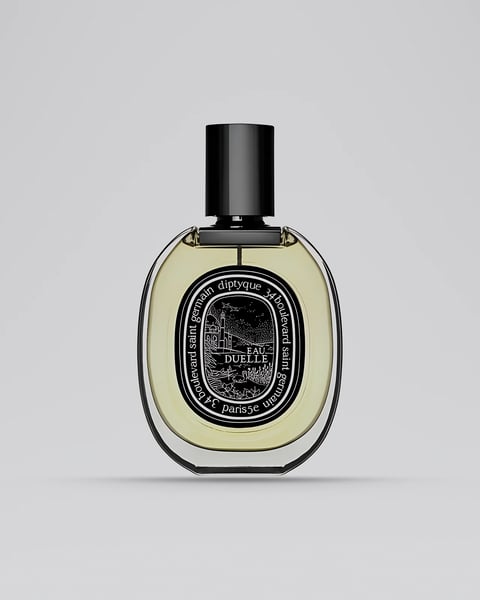
The three perfumes below, all from our catalogue, show how houses label strength on their own pages. Two are sold as eau de toilette, and one name comes in both eau de parfum and eau de toilette. None of the three is sold as an eau de cologne.
Issey Miyake
L'Eau d'Issey Pour Homme
Eau de Toilette
A men's citrus-fresh scent that the house labels eau de toilette, not eau de cologne. Issey Miyake describes it as pure and fresh, combining aquatic freshness with a powerful, woody signature. The top is yuzu, lemon and tangerine; the base is sandalwood, vetiver and an amber accord.
View perfumeDiptyque
L'Eau Papier
Eau de toilette
Diptyque calls it ink infusing a page, a deep dive into the essence of musks. It carries no gender label, which shows that the eau de toilette tier is not a men's category.
View perfumeDiptyque
Eau Duelle
Eau de parfum and eau de toilette
One name, two strengths: Diptyque lists Eau Duelle as both an eau de parfum and an eau de toilette, and describes it as an ode to travel and to vanilla, sweet and spicy. Our catalogue lists the eau de toilette, so check the strength on the bottle.
View perfume
Does a stronger concentration cost more?
Usually, yes, within a single line. Our own price guide compared 87 lines on each house's French store on 2 November 2026, at the same bottle size, or the nearest sizes within 25% where no size is shared. The median step from eau de toilette to eau de parfum was +13.3% per ml across 38 lines, and from eau de parfum to parfum +14.4% across 35 lines. The full data is in the concentration price guide.
That data covers eau de toilette, eau de parfum and parfum, plus the stronger intense, elixir and extrait versions; cologne strength is not in it. For other price comparisons, see price per ml and delivered prices by country.
How to choose
- Read the strength on the bottle, not the shelf word. "Cologne" on a shelf may be an eau de toilette.
- Treat strength names as a rough guide to how much concentrate you are getting, and remember houses set their own levels.
- Compare strengths within one house's line, where the same perfume in a higher tier holds more oil, rather than across houses.
- Read the house's own description of the scent. It tells you more about character than the strength name does.
- Try before committing to a full bottle. Our 3 and 10 ml decants suit that.